
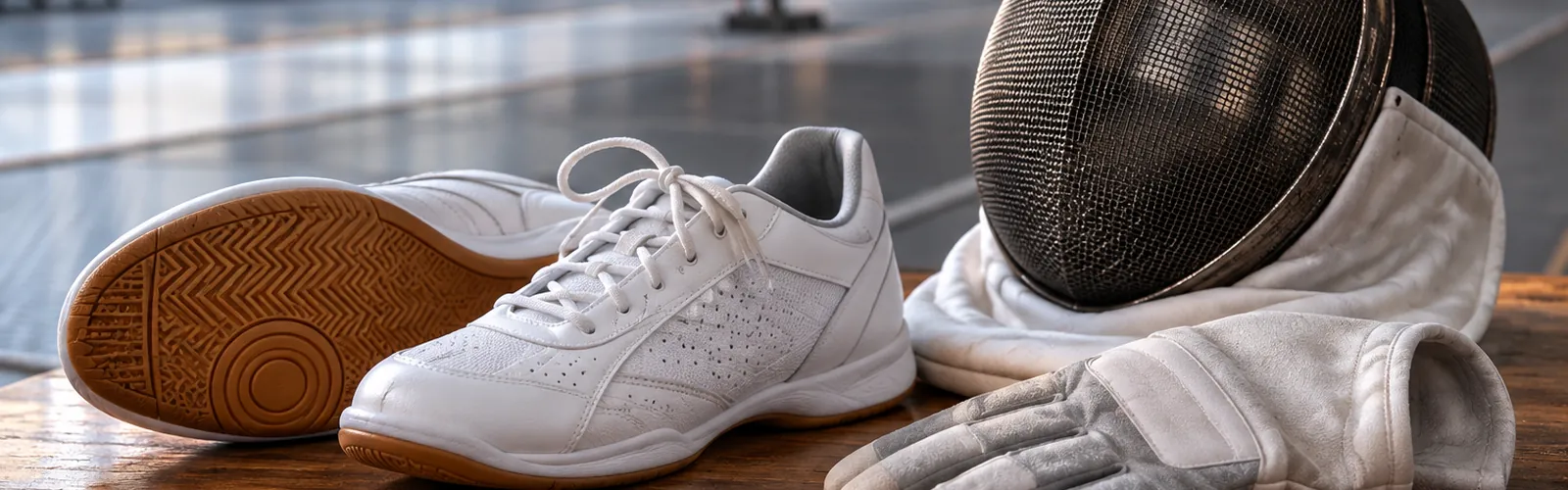
How to choose fencing shoes (and when court shoes are enough)
The best fencing shoes are the ones that keep you low, stable and gripping the floor while your feet move fast in two directions. A beginner does not need fencing shoes at all: a good indoor court shoe made for volleyball, badminton or squash does the job well. Dedicated fencing shoes earn their place once you train several times a week, mostly because they protect the back foot where it drags and cushion the front heel where it lands. Here is how to choose, whether you are buying for yourself, for a fast growing kid, or for wide or sore feet.
Do beginners need fencing shoes?
No. For the first months, almost any clean indoor court shoe works, and many experienced fencers never switch. Clubs expect beginners to show up in athletic shoes, as covered in what to wear to a first class. The question is which athletic shoe.
- Good choices: volleyball, badminton, squash, handball and indoor tennis shoes. They are built for the same floors and the same quick, sideways stops and starts.
- Poor choices: running shoes. They are designed for moving straight ahead on a thick, soft, raised heel. In fencing that tall sole lets the ankle tip over when you push off sideways and lets the foot slide inside the shoe. Many beginners who complain of sore heels and ankles are lunging in running shoes; our answer on fencing shoes and heel pain walks through that problem.
- Also skip: fashion sneakers that only look sporty, and thick soled outdoor shoes whose hard, chunky rubber can feel slippery on wooden gym floors.
Keep whichever pair you choose for indoor use only. Street grit wears the sole smooth and kills the grip, and many gyms ask for clean, non-marking soles anyway.
What makes a fencing shoe different
Fencing is lopsided. The front foot and the back foot do different jobs all bout long, and a true fencing shoe is built around that.
- Flat, low sole. You want to feel the strip under you and stay close to the ground. Less height means less leverage for the ankle to roll.
- Grippy rubber. Fencing happens on wood, sport floors and metal strips. A sole that grips lets you push off hard without the back foot skidding.
- Drag protection on the back foot. In a lunge the back foot often scrapes along the floor on its inside edge. Ordinary shoes wear through right there. Fencing shoes reinforce the inner side and toe area so they last longer for fencers who drag.
- Heel shape and cushioning for the front foot. The front foot lands heel first on every lunge. Fencing shoes usually have a rounded heel that rolls smoothly into the landing, plus padding underneath to soften it.
- Lateral support. The upper should hold your foot over the sole when you push sideways, rather than letting it slide off the edge.
A good court shoe already covers most of this list. What it usually lacks is the drag reinforcement and, sometimes, the rounded heel. That is the real difference you are paying for.
When to upgrade to real fencing shoes
Consider dedicated fencing shoes when one of these is true:
- You are wearing holes in the inside edge of your back shoe within a few months.
- You train three or more times a week and are starting to compete.
- Your lunge has grown long and fast, and your front heel takes a pounding that your court shoes do not absorb.
- You have tried a fencing shoe on and it simply fits and feels better than anything else.
If none of those apply, spending more on shoes buys you very little. Lessons and practice time do far more for your fencing, and those are where the money is better spent first.
Fencing shoes for kids
Kids outgrow shoes quickly, so for most young fencers a well fitting court shoe is the sensible choice until their feet slow down. A few fitting habits help:
- Fit standing up, with the socks they fence in. Feet lengthen under body weight.
- Leave a small gap, about a fingertip's width, past the longest toe. Buying several sizes too big to "grow into" is a mistake in a sport this quick: a loose shoe slides on every lunge and lets the ankle roll.
- Fit the bigger foot, since most people have one foot slightly larger than the other.
- Check the fit every few months during growth spurts. Curled toes, red marks or a child who suddenly complains about the shoes are your signals.
Some fencing shoe ranges come in junior sizes, which helps kids with small feet who are fencing often. Our fencing gear sizing guide for kids covers the rest of the kit.
Best fencing shoes for wide feet (and very small or large feet)
Fencing specific shoes tend to be made in narrower lasts and a shorter range of sizes than mainstream court shoes, and some run small. If you have wide feet, very large feet or very small feet, start with court shoes from the big sport brands. A single court shoe model is often sold in several widths and a long run of sizes, and you can try it on in a store before you buy. Bring your fencing socks and do a few lunges and quick steps in the shop. If the shoe pinches across the ball of the foot when you bend into a lunge, it is too narrow, whatever the size label says.
Heel pain, insoles and heel cups
The front heel absorbs the impact of every lunge, so it is the first place shoes show their limits. Three things help:
- Heel cups. A gel or foam heel cup in the front shoe adds cushion right where the lunge lands. They are cheap to try.
- Insoles and orthotics. If you already wear orthotics, choose a shoe with a removable insole and enough depth to hold them. Try the orthotic in the shoe before you buy. A podiatrist can make custom insoles if you have ongoing foot problems.
- Technique. A heel that slaps down at the end of an overreaching lunge hurts in any shoe. Our guide to the fencing lunge covers how the front foot should land.
Shoes help, but they do not treat an injury. The heel pain answer linked above explains when soreness deserves a doctor or physical therapist, and knee pain from lunging covers the next joint up. Older fencers who find their shoes jarring often do better with a more cushioned court or indoor tennis shoe, as long as the heel stays rounded enough to lunge on.
Does your weapon change the best shoe?
Less than shoe marketing suggests. Foot shape and fit matter far more than whether you fence foil, épée or sabre. That said, there are small differences in what fencers tend to prefer:
- Épée. The whole body is target in épée, feet included, so some épée fencers like a sturdier toe. Épée bouts also involve long periods of small, patient steps, so comfort over a long day counts.
- Sabre. Sabre is short, explosive bursts and very fast lunges. Sabre fencers often look for a low, firm shoe that feels planted rather than bouncy.
- Foil. Somewhere between the two. Any well fitting low court or fencing shoe works.
If you are still deciding on a weapon, see foil vs épée vs sabre. Do not let shoes drive that choice.
Nike, Adidas, Asics and fencing brands
Both big sportswear companies and fencing equipment makers produce fencing shoes. Nike and Adidas have each made fencing specific models, and fencing suppliers sell shoes under their own names. Asics is best known among fencers for its indoor court shoes, which are a very common sight at clubs. Models come and go, get redesigned, and sometimes change in ways that suit fencing less, so judge the shoe on your foot rather than the name. If you find a court or fencing shoe that fits perfectly, buying a second pair while it is still sold is a reasonable move.
Are there rules about fencing shoes at tournaments?
There is no special shoe rule. The international rules for fencing clothing cover breeches, jacket, glove and socks, but say nothing about shoe color, brand or style, and USA Fencing's dress code for the podium accepts any tennis shoe, sneaker or fencing shoe. The socks are what you need to get right: with breeches, they must be long enough to cover the legs up to the breeches, stay up, and match each other. Our fencing shoes buying page lists where to shop once you know what you want.
Care and lifespan
- Wear them only for fencing. Change shoes at the club and keep them in your bag.
- Let them dry. Pull the insoles out after practice and let both air out away from direct heat, which can weaken the glue. See how to clean and care for fencing gear for odor control.
- Wipe the soles with a damp cloth when grip starts to fade. Dust on the rubber makes even a good sole slide.
- Replace them when the sole feels flat and dead, the tread is worn smooth, the heel cushioning has packed down, or the back shoe has worn through at the drag point. How long that takes depends on how often you train and how much you drag, not on the calendar.
Start simple, buy for fit, and upgrade only when your training tells you to. The right shoe is the one you forget you are wearing while you fence.
← All guides · Find a club · Club map · FAQ